

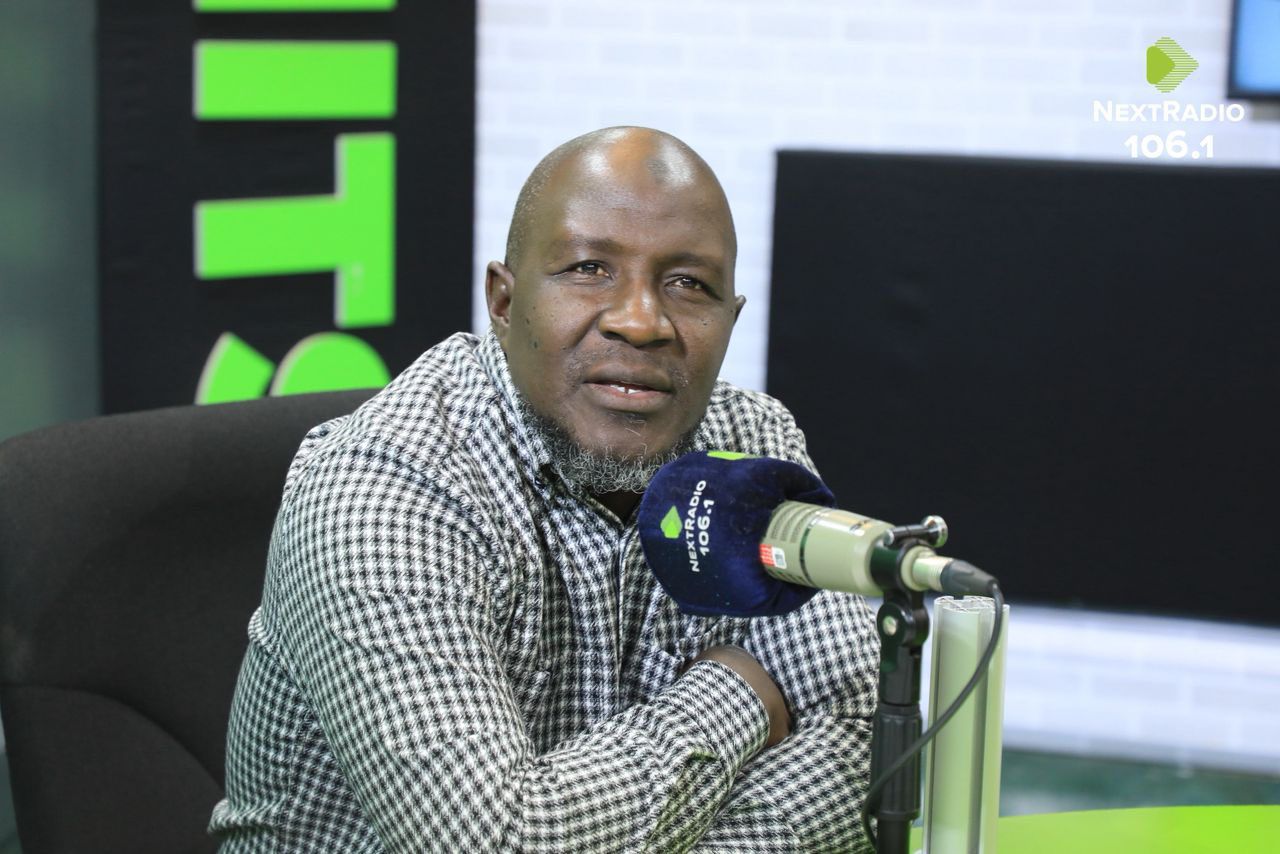
Bugiri Municipality Member of Parliament Asuman Basalirwa has defended the principle of political freedom amid renewed debate over opposition unity following the defection of Mawokota South MP Yusuf Nsibambi to the ruling National Resistance Movement (NRM).
Speaking to Canary Mugume during The Next Big Talk hosted by Next Radio on Saturday, Basalirwa emphasized that political parties are not prisons and that Uganda’s return to multiparty democracy was anchored on the freedom of entry and exit.
“I recall in 2018, I was telling Mr Museveni that if you went to Luzira Prison, for example, you might think that prison was meant for Muslims,” Basalirwa said, drawing a broader point about political and civil liberties.
“Political parties aren't prisons, and that's not why we fought for multipartism. We said people should be free, with freedom of entry and exit,” he added.
Basalirwa said Nsibambi is neither the first nor the last politician to join the NRM, stressing that the struggle for multiparty democracy was premised on freedom of association. He noted that he and former MP Odonga Otto played a significant role in advocating for the return to multipartism.
Nsibambi recently crossed from the Forum for Democratic Change (FDC) to the NRM and was welcomed at the NRM party headquarters by Speaker of Parliament Anita Annet Among and NRM Secretary General Richard Todwong.
Dressed in yellow, the symbolic colour of the ruling party, he declared his readiness to serve under the leadership of President Yoweri Museveni.
Explaining his decision, Nsibambi said he had spent his entire political life in the opposition, beginning from his university days, but had grown disillusioned over what he described as a lack of strategic direction within opposition ranks.
Nsibambi revealed that although he was appointed shadow minister for works and transport by National Unity Platform leader Robert Kyagulanyi, popularly known as Bobi Wine, opposition members had failed to harmonise positions on key parliamentary matters over the past four to five years.
“Throughout the four or five years, we have never sat as the opposition to agree on any position,” Nsibambi said, criticising what he termed uncoordinated protests and decisions, including last year’s walkout over the UPDF and political parties bills.
He described the opposition’s approach as confused and lacking clear direction.
The FDC leadership has dismissed concerns that Nsibambi’s departure will weaken the party.
FDC President Patrick Amuriat Oboi described the defection as disappointing but not surprising, citing what he called “uncomfortable tendencies” in Nsibambi’s conduct since last year.
Amuriat rejected Nsibambi’s claims that the party had weakened following the departure of certain leaders, describing such remarks as exaggerated and politically motivated.
According to Amuriat, a disciplinary committee meeting had been scheduled to address allegations that Nsibambi violated Article 12 of the FDC Constitution by meeting President Museveni at State House without authorisation. However, with Nsibambi now a member of the NRM, the matter falls under his new party.
Amuriat drew parallels to previous high-profile departures from FDC, including Beti Kamya, Maj Gen (Rtd) Gregory Mugisha Muntu, Ibrahim Semujju Nganda, and Kampala Lord Mayor Erias Lukwago, noting that none of those exits destabilised the party.
FDC is already consulting internally to fill the vacant Chief Whip position, with Soroti District Woman MP Anna Adeke Ebaju emerging as the front-runner. Amuriat said Parliament remains in session until May, allowing for an immediate appointment.
Leader of Opposition Joel Ssenyonyi also downplayed the impact of the defection, arguing that while leaders may cross to the NRM, the issues affecting citizens remain unresolved.
Nsibambi’s recent political moves had already stirred controversy within opposition circles. A few weeks prior to his defection, he led a delegation of opposition politicians, including Okot Bitek, Moses Kabusu, Roland Ndyomugyenyi, Fred Kayondo, Richard Lumu and Ssebagala, to State House for a closed-door meeting with President Museveni.
Participants indicated that discussions focused on promoting national stability and reconciliation in the aftermath of a tense post-election period.
The delegation reportedly appealed for presidential pardons for individuals detained over political activities and called for an independent investigation into the detention of Muhammad Muwanga Kivumbi, Deputy President for Buganda of the National Unity Platform (NUP) and MP for Butambala County.
Critics within the opposition accused Nsibambi of acting unilaterally and undermining collective party positions by engaging the President without broader consultation.
Nsibambi defended his actions, insisting he acted independently and in the national interest.
His defection follows his loss of the Mawokota South parliamentary seat in the January 15, 2026 general elections to NRM’s Suzan Kawuki.
Appointed FDC Chief Whip in October 2023 and previously serving as Deputy President for the Central Region, Nsibambi joined active politics as a reformist under FDC after a 27-year career teaching law at Makerere University and serving as Chairperson of the Kampala District Land Board.
Nsibambi joins a growing list of former FDC members who have crossed to the NRM, including Speaker Anita Among, Deputy Speaker Thomas Tayebwa, Kilak North MP Anthony Akol, former State Minister for Agriculture Christopher Kibanzanga, and State Minister for Environment Beatrice Anywar.
Others are Bardege-Layibi MP Martin Ojara Mapenduzi, State Minister for ICT and National Guidance Joyce Nabbosa Ssebugwawo, Ambassador Henry Mayega, and former State Minister for Local Government Alex Onzima, former IGG Beti Kamya, and Bugweri County MP Abdu Katuntu.
Analysts say the continued exodus of prominent members has sparked questions about the future strength and ideological cohesion of the FDC, as former members have also moved to parties such as the Alliance for National Transformation, NUP and the People’s Front for Freedom.
Nevertheless, FDC leadership maintains that the party remains resilient and committed to rebuilding with what it describes as ideologically consistent members.
Basalirwa’s remarks underscore the enduring debate over loyalty, ideology and the meaning of multiparty democracy in Uganda.
